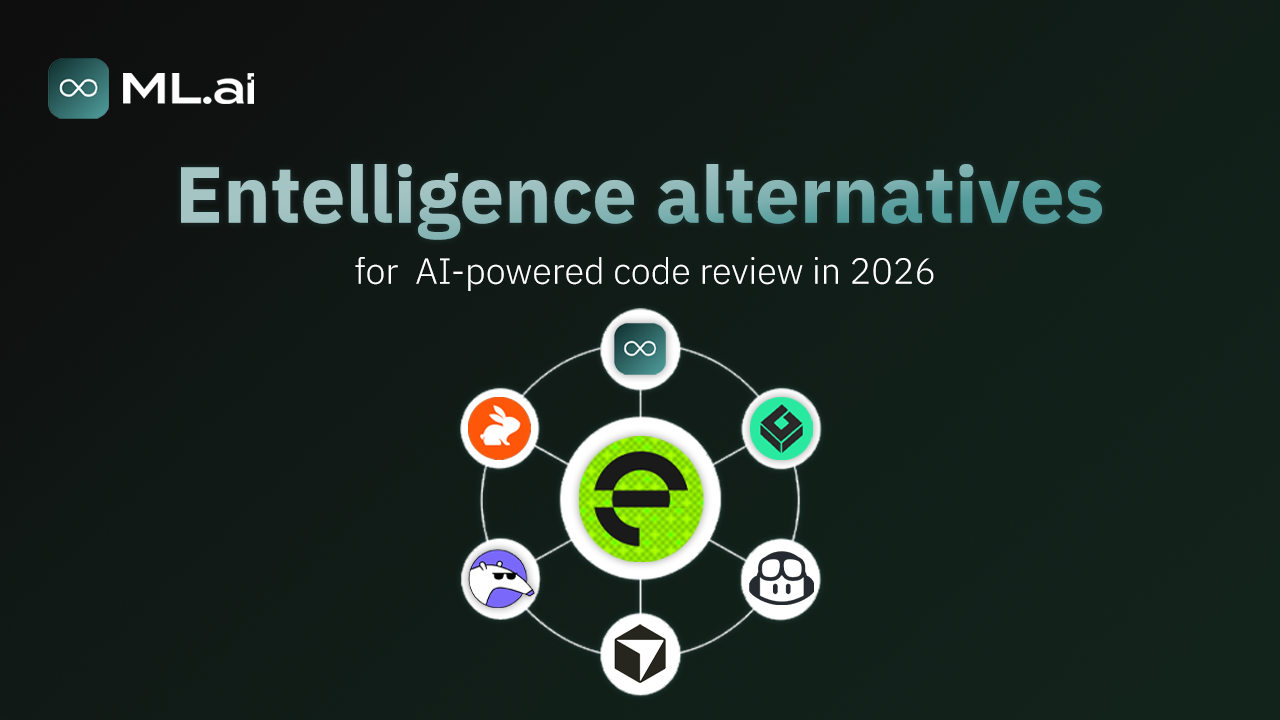
Entelligence alternatives for AI-powered code review in 2026

Taran Srivastava
Senior Product Manager
The best Entelligence alternative depends on why you looked at Entelligence. If you want cheaper AI review on pull requests, CodeRabbit, Greptile, GitHub Copilot or Cursor Bugbot cost less at every team size than Entelligence prices for. If you need self-hosting, Qodo's open-source PR-Agent runs on your own infrastructure. And if the real goal is better code at lower agent spend, ML.ai Code catches problems while the code is being written, before any review bot runs.
Below: what Entelligence sells today, what its plans include, and six alternatives compared on price, Git hosts, and where in the workflow they catch bugs.
What does Entelligence actually sell in 2026?
Entelligence started as an AI code review and documentation tool. Its homepage now describes it as a "cost and quality optimization engine for engineering agents," with four products: a World Model (a graph of your code, PRs, deploys and incidents), a Model Router that sends each agent turn to a cheaper model, Agent Insights for agent spend, and Code Review.
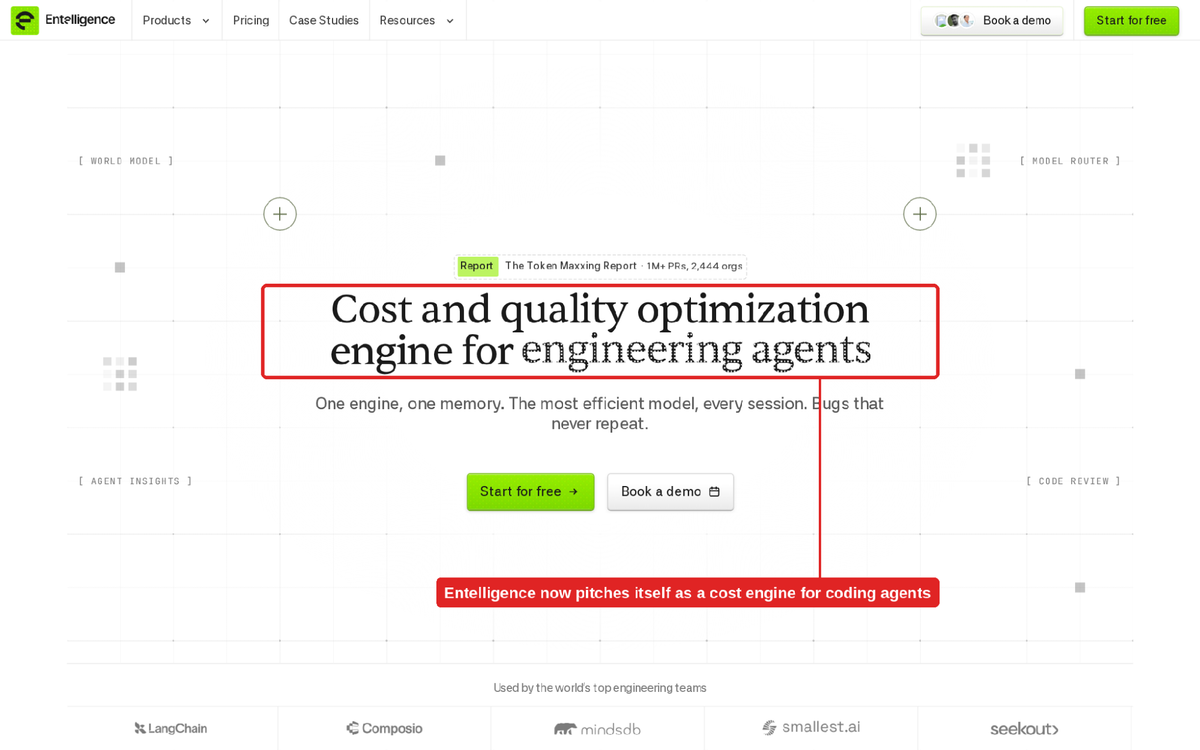
The code reviewer is the part most buyers compare. Entelligence says it indexes your codebase and incidents, runs separate passes for security, performance, precedent and contracts, and turns each resolved incident into a rule the next PR is checked against. The router installs as a CLI that sits in front of Claude Code, Codex and Cursor.
Why do teams look for Entelligence alternatives?
Most of the reasons trace back to how the product is packaged and priced, plus a limit every PR bot shares.
You pay for a team-size band, with a review cap
Entelligence's pricing page has three plans. Startup is $750 a month for up to 15 engineers and includes 300 reviews a month. Scale is $2,500 a month for 16 to 50 engineers with 1,000 reviews. Reviews beyond the cap cost $1 each. Enterprise is custom.
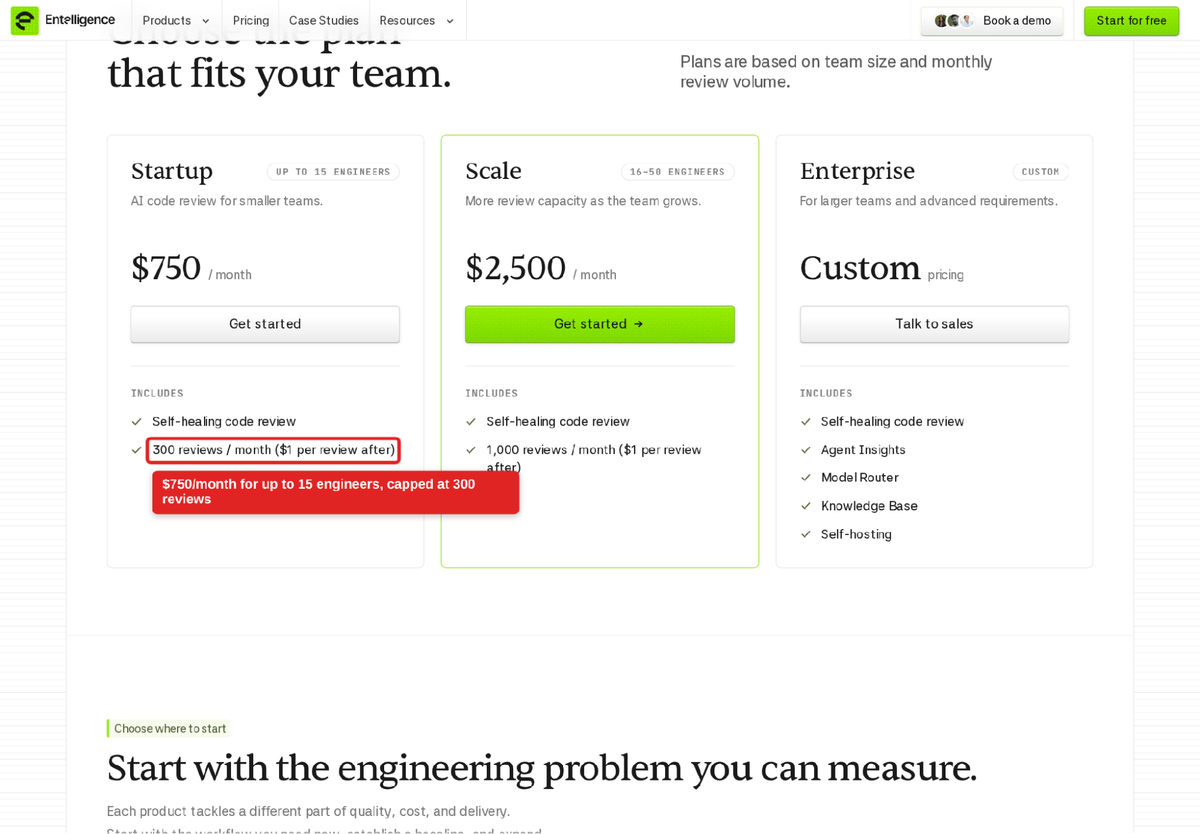
A band price favors teams at the top of the band. A 5-person team on Startup pays $150 per engineer per month; a 15-person team pays $50. The page itself warns that "Commercial terms can vary by plan, billed seats, usage, product access, and deployment," so the listed number is a starting point for a sales conversation.
The router, insights and self-hosting sit behind Enterprise
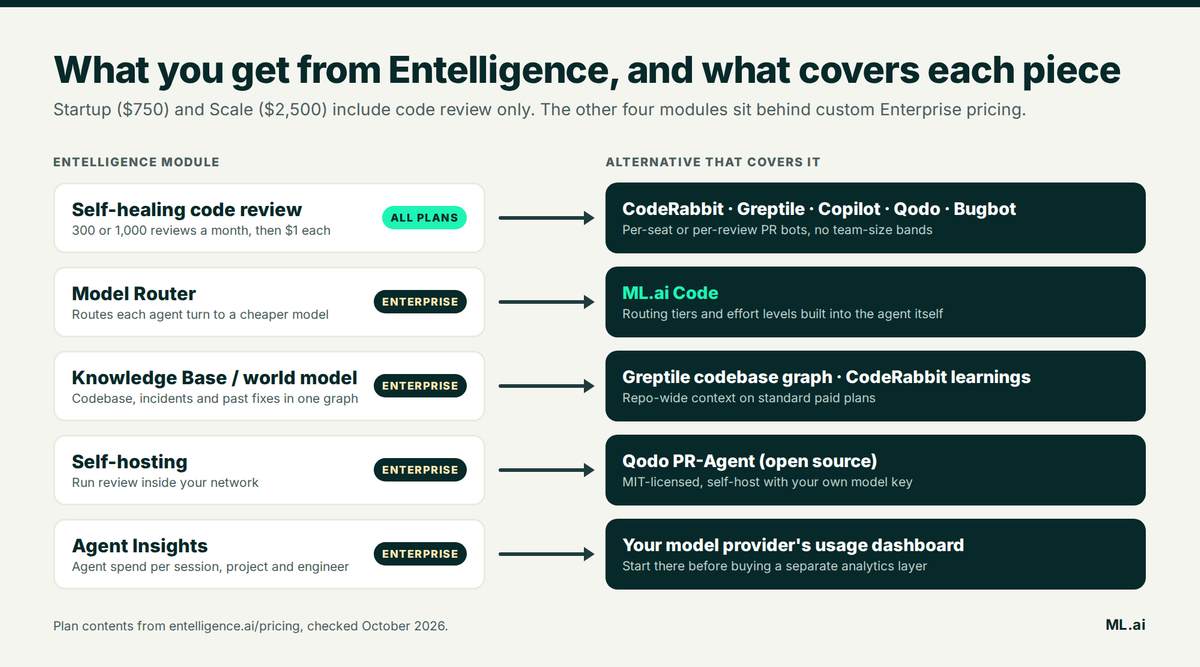
The features in Entelligence's headline are mostly Enterprise-only. The pricing page lists Agent Insights, Model Router, Knowledge Base and Self-hosting under Enterprise, and its FAQ is explicit: "Agent Insights is included in Enterprise. It is not included in Startup or Scale." On the two listed plans, you are buying code review.
Per-seat review tools cost less at every listed team size
We plotted each tool's monthly list price from 1 to 50 engineers, the range Entelligence publishes prices for. CodeRabbit Essentials, Greptile Pro and Copilot Business all come in under Entelligence's band price at every size. Even CodeRabbit's higher Team tier stays below it: $720 against $750 at 15 engineers, and $2,400 against $2,500 at 50.
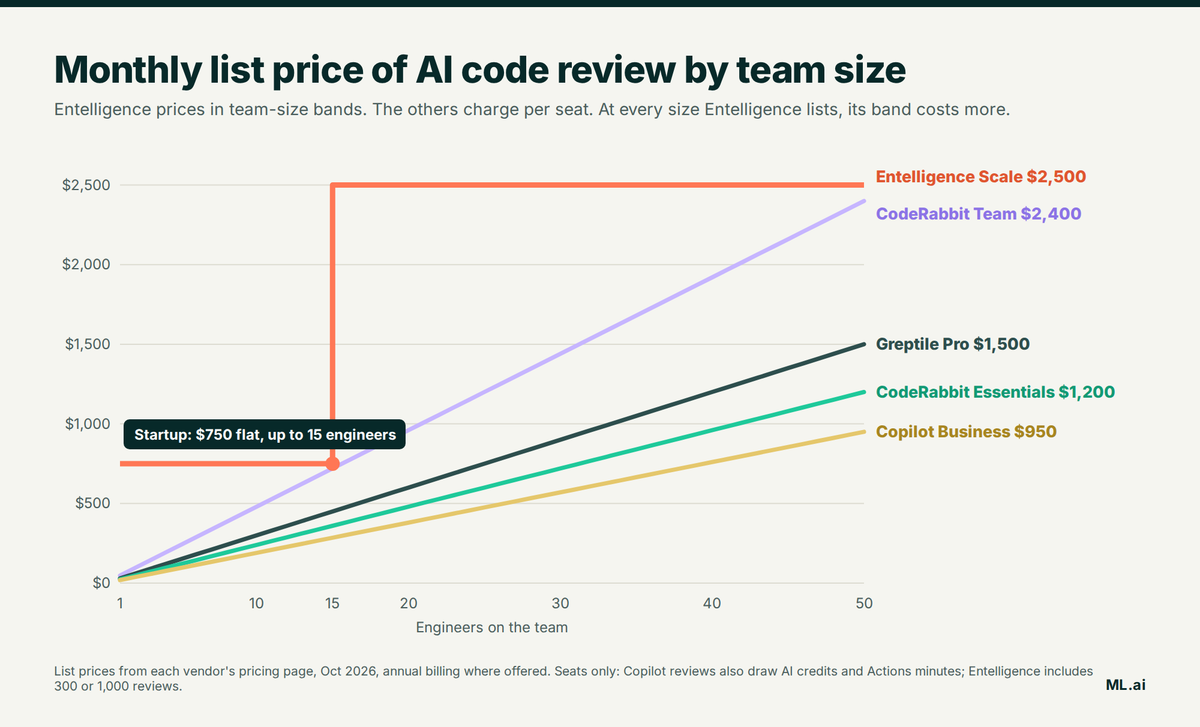
Two caveats keep the comparison fair. Entelligence includes 300 or 1,000 reviews in the price, while Copilot review also draws AI credits and Actions minutes. So run your own PR count through each model before you decide.
There is little independent feedback to check the claims against
Entelligence's homepage cites results such as "−43% per merged PR in 12 weeks" and "9 in 10 tasks don't need frontier models," drawn from its own report. Third-party user discussion is harder to find. We searched Hacker News for every story linking to entelligence.ai: there are 11 since July 2024, and at least five were posted by the company's own account or by people describing it as something "we built." The most-upvoted one (167 points) was a model-cost comparison from Entelligence's blog, not a discussion of the product.
That does not make the claims wrong. It means you will be validating them in your own pilot, which the pricing FAQ itself recommends: "Start with one measurable workflow."
Every PR bot misses bugs, so where you catch them matters
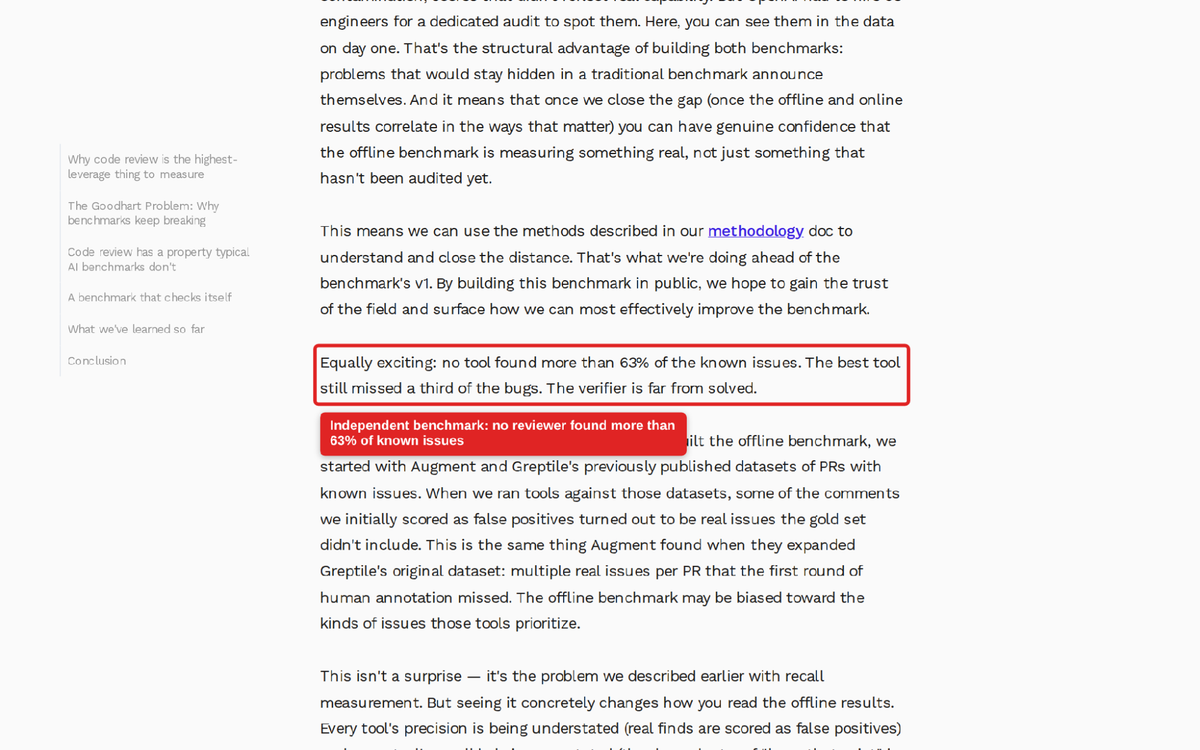
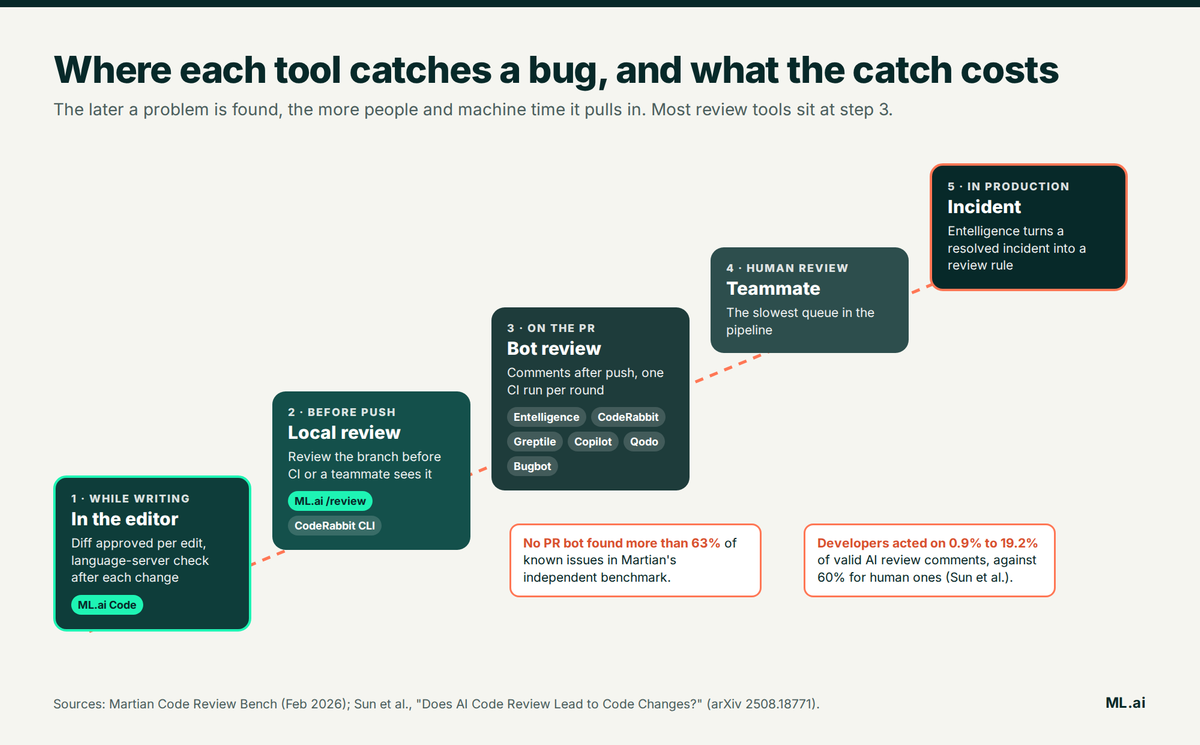
This applies to every tool in this article, Entelligence included. Martian's independent Code Review Bench found that "no tool found more than 63% of the known issues."
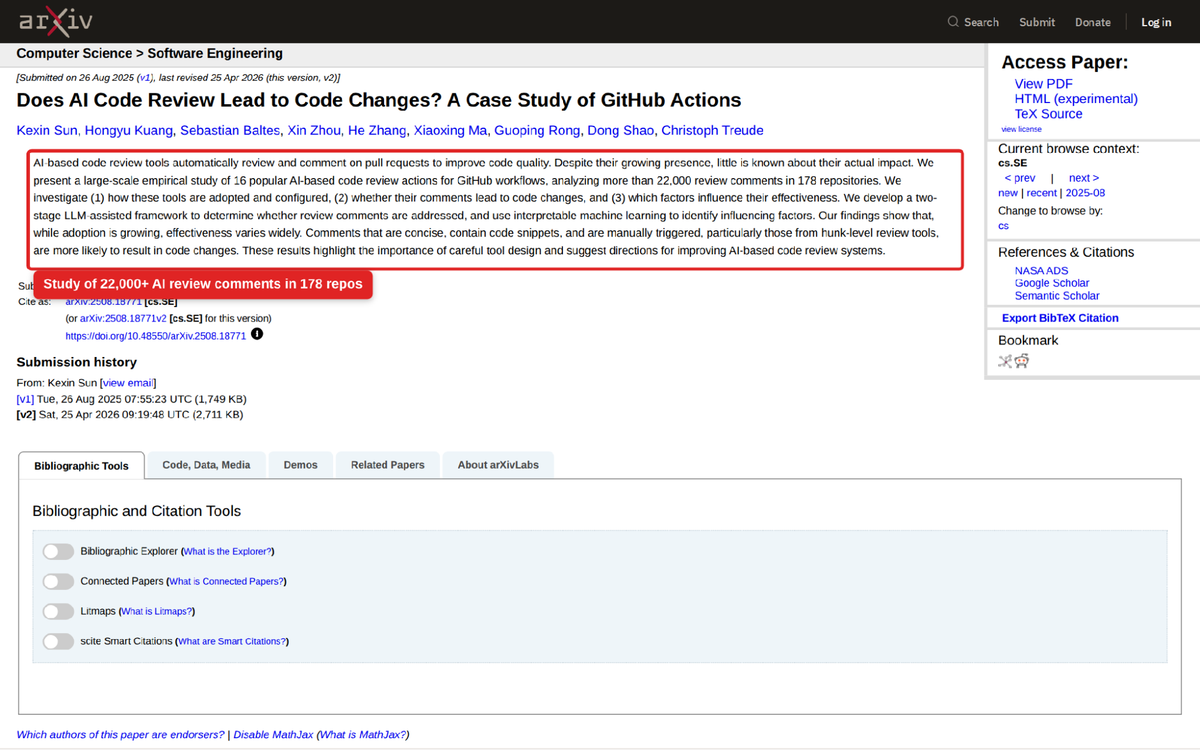
And catching a bug is only half of it. A study of 22,000+ AI review comments across 178 repositories, "Does AI Code Review Lead to Code Changes?", found developers acted on only 0.9% to 19.2% of valid AI comments, depending on the tool, against 60% for human comments.
A review bot is a useful last check. It works best when fewer problems reach it in the first place, which is why the first tool below works earlier in the pipeline.
Best Entelligence alternatives compared
Six tools, chosen to cover each reason above. Prices are list prices from each vendor's pricing page in October 2026; confirm before you commit.
| Tool | Where it catches bugs | Git hosts | Pricing | Best when |
|---|---|---|---|---|
| ML.ai Code | In the editor, before push | Any (works on your local repo) | Early access | You want fewer bugs reaching review and lower agent spend |
| CodeRabbit | On the PR, plus IDE and CLI | GitHub, GitLab, Bitbucket, Azure DevOps | $24 to $48 per dev/mo (annual) | You want per-seat review on any Git host |
| Greptile | On the PR, with full-codebase graph | GitHub, GitLab, Bitbucket | Free (1 dev); Pro $30/seat/mo | You want Entelligence-style repo context on a standard plan |
| GitHub Copilot code review | On the PR | GitHub (Azure DevOps in preview) | Any paid Copilot plan, plus usage | You already pay for Copilot |
| Qodo | On the PR | GitHub, GitLab, Bitbucket, Azure DevOps, Gerrit | Credits from $0.012; PR-Agent free | You need on-prem or Gerrit |
| Cursor Bugbot | On the PR | GitHub, GitLab, Bitbucket, Azure DevOps | About $1 to $1.50 per run | Your team already works in Cursor |
1. ML.ai Code
Best for: AI engineers who want fewer bugs reaching review and lower token spend from the same agent.
ML.ai Code is an AI coding agent inside Visual Studio Code. It reads your repository, plans a change, applies it with your permission, runs commands and checks the result. Entelligence adds a router in front of your agent, a reviewer after the PR, and analytics on top. ML.ai Code puts routing, spend control and review inside the agent that writes the code, where a fix is cheapest.
Routing and effort are built in. Work is routed to one of two tiers, ML.ai Standard or ML.ai High, and you pick reasoning effort per message across five levels, from low to max. A rename does not burn the same reasoning tokens as a cross-module refactor. That is the same idea as Entelligence's "9 in 10 tasks don't need frontier models," handled without a separate proxy. For background, see our guide to small language models versus frontier models.
Wrong approaches are caught before you pay to build them. Plan mode investigates and writes a plan with the edit and write tools switched off at the tool layer. The Architect agent returns the order of work, the files involved and the trade-offs. A bad design gets rejected while it is a paragraph, before it becomes a 900-line PR that a review bot has to read.
Your editor checks every change as it lands. After the agent edits a file, ML.ai Code asks your installed language servers what broke and feeds the answer back to the model. It waits for analysis to settle so it never reports a clean file by mistake. Type errors and broken imports get fixed in the same turn, so they never become PR comments.
You review each diff before it is written. Edits open a native VS Code diff before you approve them: Allow for this change, Always to save a rule, Deny to stop. Every line has had one human look before any bot sees it.
Review runs inside the editor. The /review command now ships, and you can create a dedicated review agent in plain language, such as "Create a subagent that reviews pull requests for security issues." The read-only Explore agent answers blast-radius questions ("list every caller of this function") without changing a file.
Context stays visible. A context meter shows tokens used against the model's limit and turns amber at 65% and red at 85%, so you can start a fresh session before long-context quality drops. An experimental Code mode cuts about 1,700 tokens per turn by letting the model call tools through a short program instead of receiving every tool schema.
Limitation: ML.ai Code is an editor agent, so it does not post comments on hosted pull requests. If your process requires a bot on every PR, run it alongside one of the reviewers below; it will simply have less to flag. There is no cost meter yet: the team parked it because the engine does not supply reliable billing data, and ML.ai will not show an estimate as fact. Per the docs, it runs on VS Code 1.125.0 or newer (or a compatible Cursor release) on macOS Apple Silicon or Windows x64.
If your review queue is full of problems an editor could have caught, move the check upstream. Get early access to ML.ai Code and run your next ticket through Plan, diagnostics and /review before it opens a PR.
2. CodeRabbit
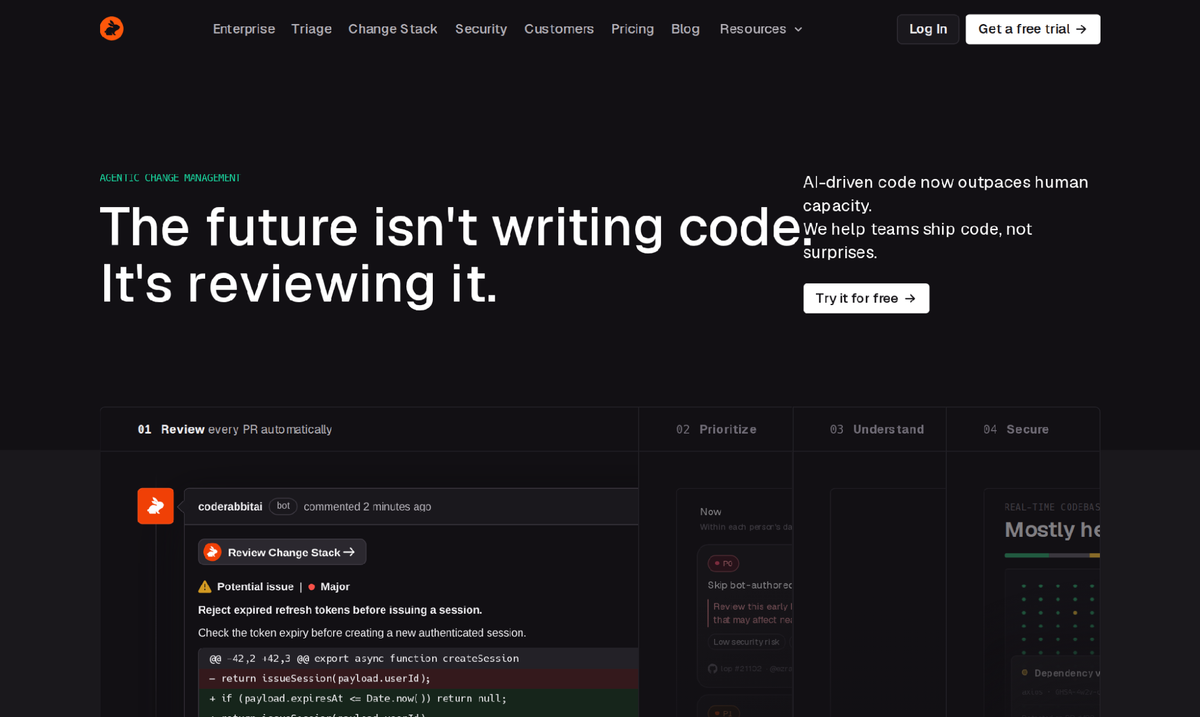
Best for: per-seat AI review across GitHub, GitLab, Bitbucket and Azure DevOps.
CodeRabbit is the most direct swap for Entelligence's reviewer. It reviews every PR line by line, learns team preferences from replies, is configured through a .coderabbit.yaml file, and also reviews in the IDE and CLI before you push. Pricing is $24 per developer per month on Essentials and $48 on Team, billed annually, and you are only charged for developers who create pull requests. Public repositories are free.
Its customer data is the most detailed in the category. At Clerk, the team merged PRs 40% faster and accepted 70% of the potential bugs CodeRabbit flagged. At trivago, developers accepted 43.4% of 1,620 review comments. The usual complaint is volume: one engineer wrote that it "calls things 'critical' that arent and flags issues that dont actually exist" (andrekandre, Hacker News). Plan a week to tune the config.
3. Greptile
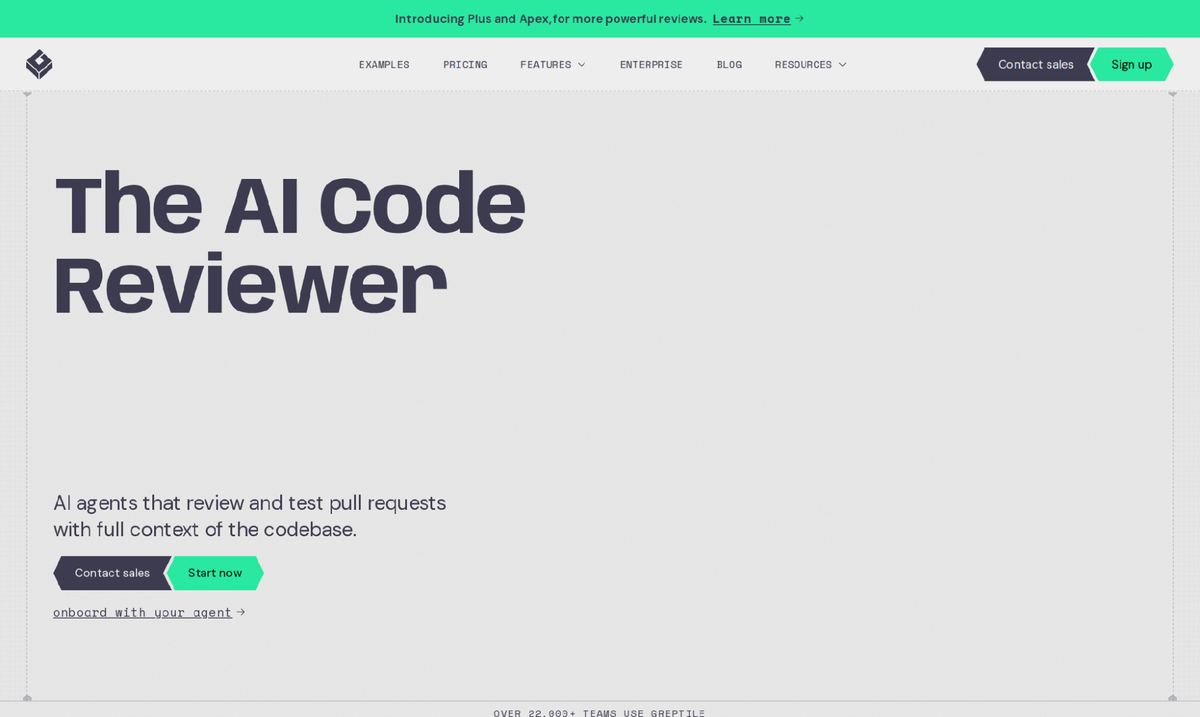
Best for: teams that want Entelligence-style codebase context without Enterprise pricing.
Entelligence keeps its Knowledge Base on Enterprise. Greptile builds a graph of your whole codebase on every plan, so reviews can trace how a change affects code outside the diff. Pricing starts with a free plan for one developer (50 credits a month), then Pro at $30 per seat per month with 50 credits per seat and extra credits at $1. A base review costs 1 credit and the deepest "Apex" review 10. Self-hosting is on Enterprise.
Brex says "Greptile reviews 100% of the code we write" in its customer story. Greptile also reports topping Martian's benchmark on F1 score; that ranking is vendor-reported, so check the live leaderboard. Results vary by codebase, and one Hacker News user called it "pretty much pure noise" (sebra). Pilot it on a month of real PRs.
4. GitHub Copilot code review
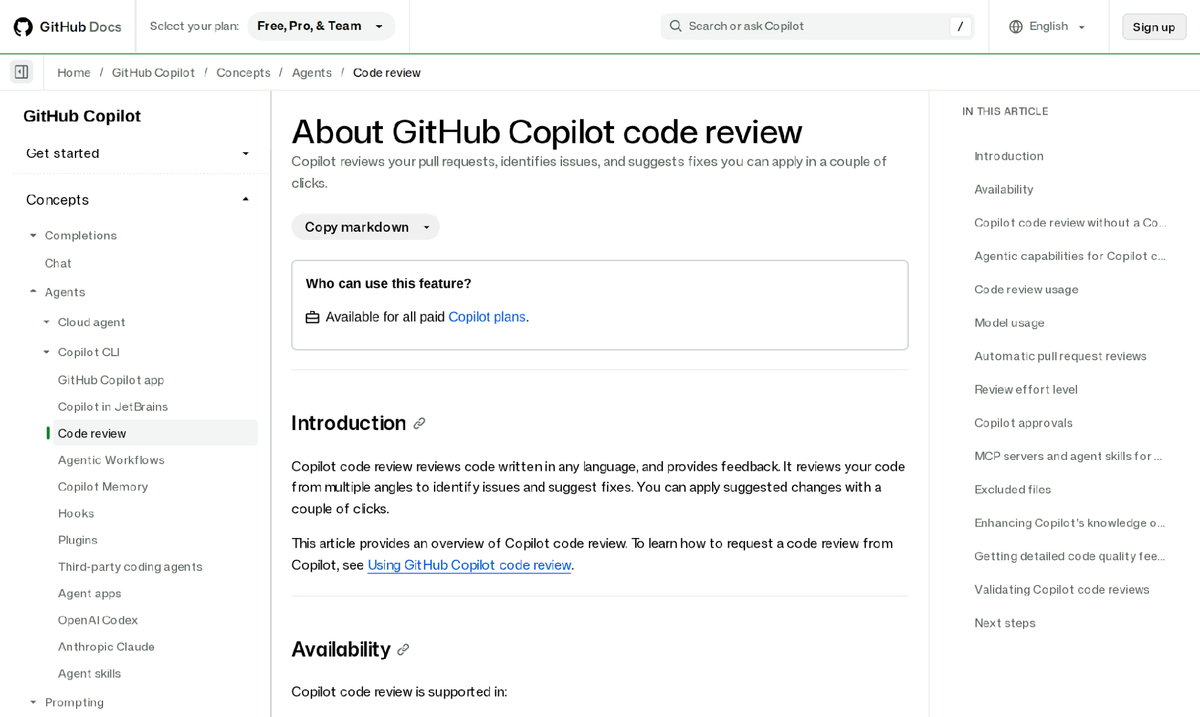
Best for: GitHub teams already paying for Copilot.
Copilot code review is available on all paid Copilot plans, with Business at $19 per seat per month. It is the most widely used reviewer by volume: GitHub reports 60 million reviews, more than one in five code reviews on GitHub, and over 12,000 organizations running it on every PR.
Budget for two meters. GitHub estimates a review at $0.05 to $1 of AI credits on "Lite" effort and $0.25 to $5 on "Balanced," and since 1 June 2026 reviews on private repos also consume Actions minutes. Users report real catches: one engineer said it found "a bunch of nasty race conditions," though it can surface issues "bit by bit over 2-3 runs" (dathinab, Hacker News). For the wider Copilot picture, see our GitHub Copilot alternatives breakdown.
5. Qodo
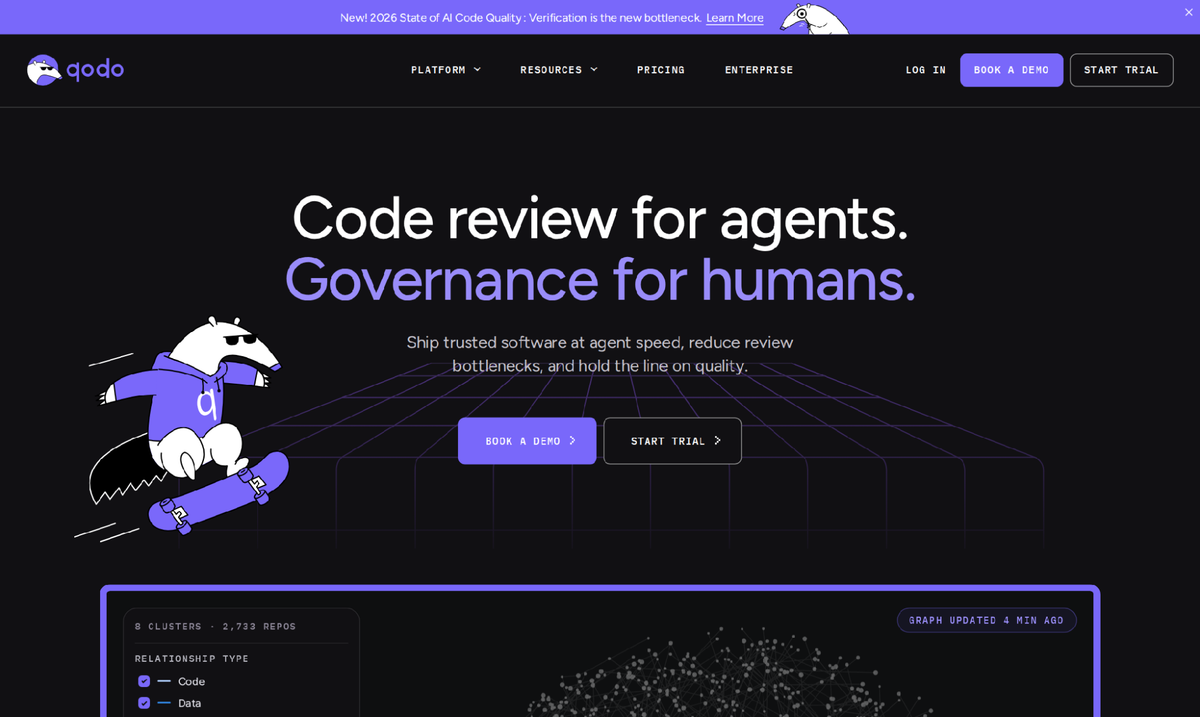
Best for: regulated teams that need on-prem review or Gerrit support.
Entelligence offers self-hosting only on Enterprise. Qodo covers more deployment shapes: its paid product, Qodo Review, runs as SaaS, single-tenant or on-prem with your own model keys, across GitHub, GitLab, Bitbucket, Azure DevOps and Gerrit. Pricing is credit-based at $0.012 per credit, pooled across the team, and there is no permanent free tier.
If you want free and self-hosted, the open-source PR-Agent (MIT-licensed, 13,000+ GitHub stars, last release September 2026) runs /review, /improve and /describe with your own LLM key on GitHub, GitLab, Bitbucket, Azure DevOps and Gitea. It is now a community-maintained project. On the paid side, Qodo reports that at monday.com it prevents about 800 potential issues a month and saves roughly an hour per pull request.
6. Cursor Bugbot
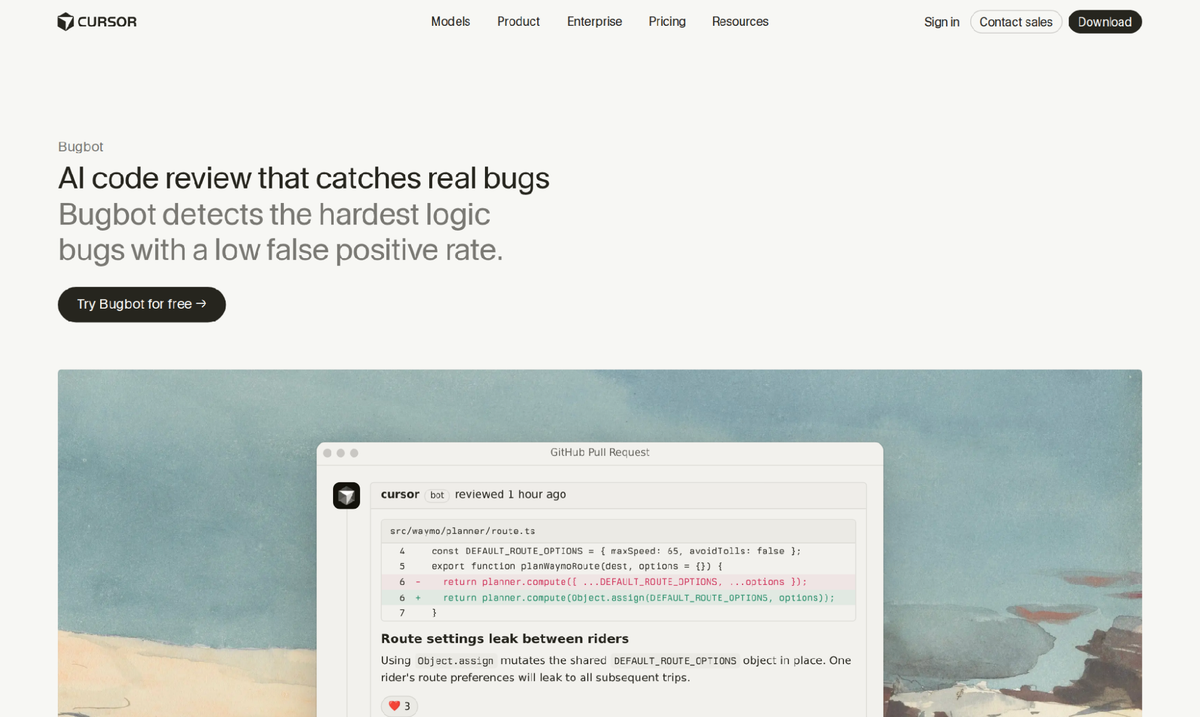
Best for: teams that already write code in Cursor and want review billed by use.
Bugbot moved from a $40 seat to usage-based billing in 2026, and Cursor says the average run costs $1.00 to $1.50 depending on PR size. That is close to Entelligence's $1 overage rate, with no band or review cap. It supports GitHub (including Enterprise Server), GitLab (including self-hosted), Bitbucket and Azure DevOps.
Engineering analytics company Jellyfish measured Bugbot on its own 18-engineer team and found PR throughput more than doubled, with 39% fewer changes requested. Users describe it as "genuinely helpful, though it can be irritatingly inconsistent" (fizzyfizz, Hacker News).
Which Entelligence alternative fits your team
How to test a code reviewer before you switch
Every vendor in this space, Entelligence included, publishes its own benchmark. Run a small one on your code instead.
What to do this week
You now know what Entelligence's $750 and $2,500 plans include, which features need Enterprise, and which alternative covers each piece for less. The first step takes an afternoon: pull 20 merged PRs that later needed fixes and run the test above on your two strongest candidates.
If most of those bugs could have been caught while the code was being written, the cheapest reviewer is the one in your editor. Get early access to ML.ai Code and run those tickets through it before your next PR goes up.
Frequently Asked Questions
What is Entelligence used for?
Entelligence is an AI platform for engineering teams that combines AI code review with a model router for coding agents, agent spend analytics and a knowledge graph of your codebase and incidents. Its listed Startup and Scale plans include code review; the other modules are on Enterprise.
How much does Entelligence cost?
Startup is $750 a month for up to 15 engineers with 300 reviews, and Scale is $2,500 a month for 16 to 50 engineers with 1,000 reviews. Extra reviews cost $1 each. Enterprise, which adds Agent Insights, Model Router, Knowledge Base and self-hosting, is custom-priced.
What is the cheapest Entelligence alternative?
The open-source PR-Agent is free if you supply your own model key. CodeRabbit is free on public repositories, and Greptile has a free plan for one developer. For paid per-seat review, CodeRabbit Essentials at $24 per developer per month (annual) is the lowest list price among the dedicated reviewers here.
Which Entelligence alternative supports self-hosting?
Qodo offers single-tenant and on-prem deployments with your own model keys, and PR-Agent can be self-hosted for free. CodeRabbit and Greptile offer self-hosting on their Enterprise plans.
Can ML.ai Code replace Entelligence's Model Router?
For work done in ML.ai Code, yes: routing between ML.ai Standard and ML.ai High tiers and per-message reasoning effort are built into the agent. Entelligence's router sits in front of other agents such as Claude Code, Codex and Cursor, so if you need to route traffic from those tools, that is a different job.
Written by
Taran Srivastava
Senior Product Manager